Dominate the Display Graphics Market with EFI Soft Signage Printers
Table of Contents Dominate the Display Graphics Market with EFI Soft Signage Printers EFI VUTEk FabriVU printers let your shop produce fabric display graphics, from
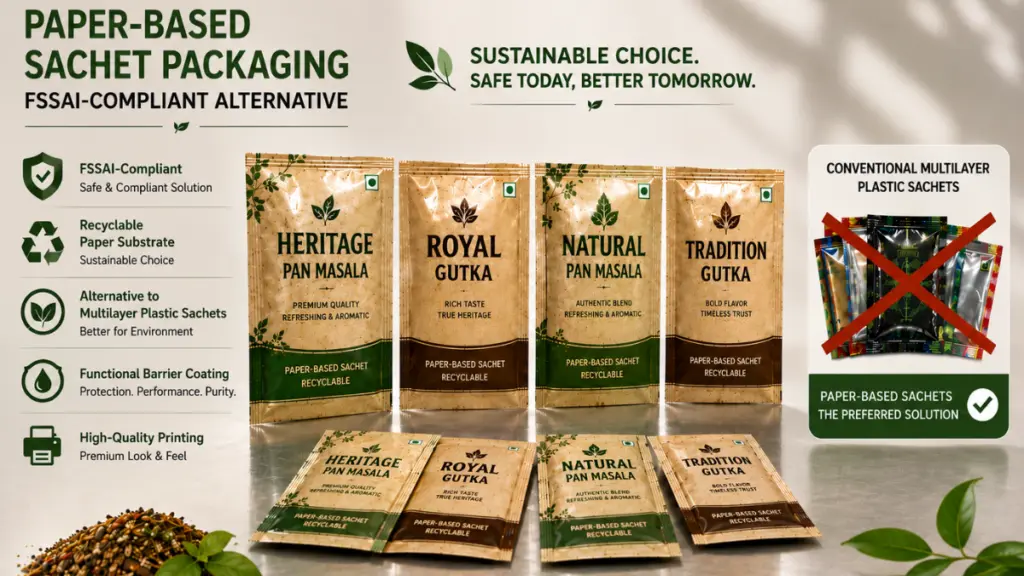
FSSAI has proposed a ban on plastic sachets for pan masala and gutka, requiring paper or cellulose-based packaging instead.
In a draft notification issued on 28 April 2026, the Food Safety and Standards Authority of India (FSSAI) proposed amendments to the Food Safety and Standards (Packaging) Regulations, 2018. The proposal targets the multilayer plastic (MLP) sachets that dominate the pan masala and gutka segment across India. If notified in final form, it would require a complete packaging overhaul across one of the country’s highest-volume FMCG categories.
The draft is currently in a 30-day public consultation period — objections and suggestions can be submitted by industry stakeholders. The direction of regulation is clear. The transition window, however, is narrow. Converters who begin evaluating compliant packaging alternatives now will be positioned ahead of both the enforcement date and the brand-owner demand that will follow it.
The Proposal | FSSAI has proposed to amend the Food Safety and Standards (Packaging) Regulations, 2018 to prohibit plastic and multilayer plastic materials in pan masala and gutka packaging. |
What Is Prohibited | Polyethylene (PE), polypropylene (PP), polyester (PET), polyvinyl chloride (PVC), all other synthetic polymers, multilayer laminates, aluminium foil, and metallised layers. |
What Is Permitted | Paper, paperboard, cellulose-based materials, materials derived from naturally occurring substances, tin containers, and glass containers. |
Current Status | Draft notification — open for 30-day public consultation. Enforcement dates and transition timelines to be defined after final gazette notification. |
The draft references existing provisions in the Plastic Waste Management Rules, 2016, which already prohibit plastic sachets for storing, packing, or selling gutka, tobacco, and pan masala. The FSSAI amendment aligns food packaging regulations directly with those rules, closing a compliance gap that the packaging industry has operated within.
Enforcement dates and transition timelines have not been specified yet. These will be defined only after the draft is notified in final form in the Official Gazette. Converters should monitor the gazette and begin substrate and equipment evaluation now to minimise the adjustment period once enforcement timelines are announced.
The shift away from MLP sachets is a fundamental packaging infrastructure change — not simply a material swap. Pan masala brands rely on MLP sachets for three specific reasons: low material cost, inherent moisture resistance, and compatibility with form-fill-seal (FFS) converting lines. Paper-based alternatives can address each of these requirements, but they demand different substrates, coatings, and print processes.
Factor | MLP Sachet (Current) | Paper-Based Compliant Alternative |
Material | Multilayer plastic laminates, metallised film | Barrier-coated paper, paperboard, cellulose-based substrates |
Plastic content | PE, PP, PET, or aluminium layers | Zero — PE-free, plastic-free throughout |
Moisture resistance | Inherent to plastic laminate structure | Provided by functional barrier coating on paper |
Print process | Gravure or flexo on plastic film | Digital inkjet on coated paper — no plates required |
Run flexibility | Large minimum order quantities to justify plate costs | Short-to-medium runs viable; no plate investment |
Regulatory status | Prohibited under proposed FSSAI amendment | Compliant with FSSAI draft proposal |
The cost per unit will increase in the near term as converters source new substrates and calibrate production. However, digital printing on coated paper eliminates plate and make-ready costs entirely, making the economics of smaller production runs significantly more favourable than gravure or flexo on plastic.
For in-house packaging teams currently running plastic sachet lines, the transition also opens a new conversation about digital label printing as the primary production method — replacing minimum-order-dependent gravure runs with on-demand digital capability on compliant paper substrates.
A compliant paper-based sachet for pan masala needs three functional properties: a moisture barrier to protect the product, heat-seal capability for FFS or pre-made pouch conversion, and a printable outer surface that accepts high-resolution digital ink without bleed or feathering.
Barrier-coated paper meets all three requirements. It is a cellulose-based substrate — derived from naturally occurring materials and therefore compliant with the FSSAI proposal — with functional coatings applied to resist moisture, grease, and oxygen migration. It contains no polyethylene, polypropylene, or synthetic polymer layers. Globally, manufacturers such as UPM, Sappi, and Mondi produce barrier paper grades specifically designed to replace plastic laminates in sachet and flexible packaging applications.
Understanding how digital label printing works is key for converters evaluating this transition. Unlike gravure or flexo, digital printing does not require printing plates, enabling short runs, fast job changeovers, and variable data — capabilities that matter significantly when packaging artwork is being updated for regulatory compliance and SKUs are in transition.
One important note: barrier-coated paper substrate availability for specific converting applications in India should be confirmed with substrate suppliers before production commitments are made. Arrow Digital’s applications team can assist with substrate qualification trials.
The ArrowJet Aqua 330R II is built specifically for pouch, sachet, and flow-wrap printing — applications that map directly to the pan masala packaging transition. Powered by Memjet’s DuraCore™ print engine, it delivers 1600 × 1600 dpi resolution at production speeds up to 67 metres per minute on roll-to-roll substrates, including coated paper grades.
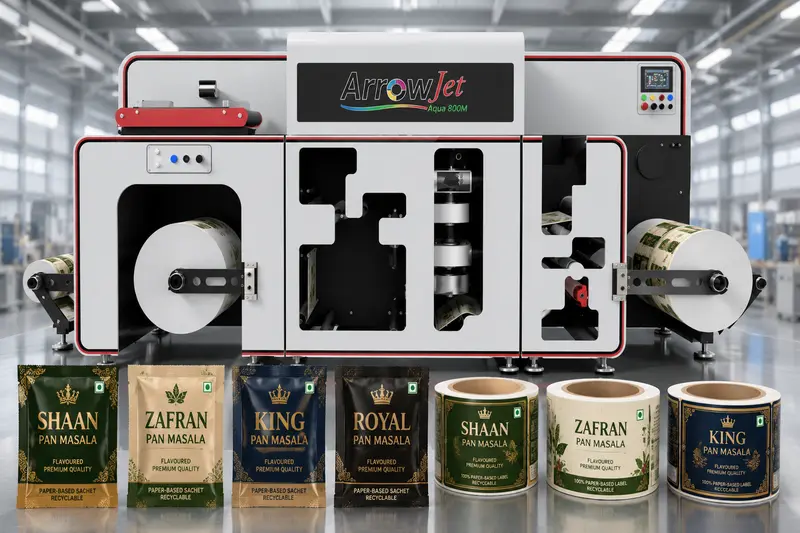
For converters handling wider webs or higher-volume flexible packaging runs, the ArrowJet Aqua 800M provides a 638mm print width with the same Memjet water-based pigment ink platform. Both systems support inline and offline finishing configurations, enabling converters to integrate digital printing into existing converting lines with minimal workflow disruption.
The decisive advantage during a regulatory transition period is run flexibility. MLP sachets are typically ordered in large quantities to justify gravure cylinder tooling. Digital printing on paper eliminates plate costs entirely — converters can produce trial runs, artwork variations, regional SKUs, and compliance test batches without committing to large stock volumes while enforcement dates are still being defined.
You can explore the full range of label and packaging solutions available from Arrow Digital to identify which equipment configuration aligns with your production volume, substrate range, and finishing requirements.
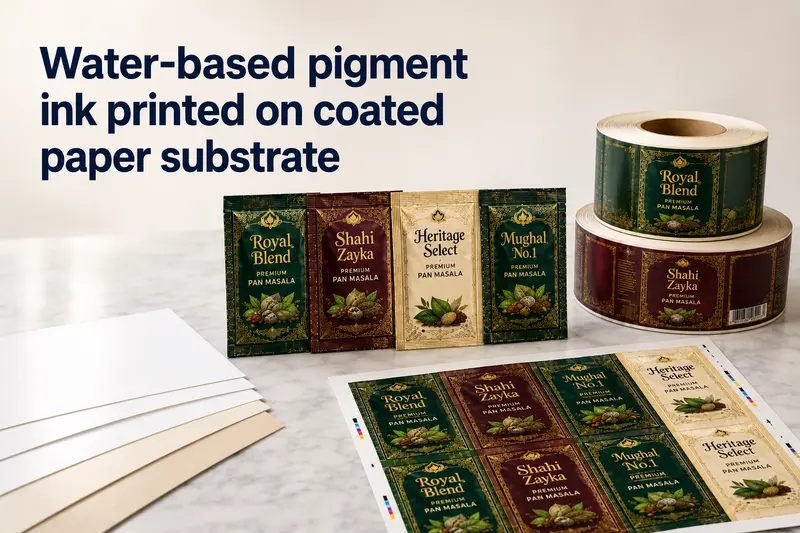
For food-adjacent packaging, ink chemistry is as important as substrate selection. The Memjet water-based pigment inks used across the ArrowJet range are formulated to be free of UV-reactive substances and phthalates — two material categories of concern for packaging in proximity to food products.
These inks are formulated to align with Swiss Ordinance (SR 817.023.21) food-contact frameworks and Nestle Guidance standards — two of the most widely referenced benchmarks for food-contact packaging ink safety in global supply chains. The Memjet ink platform also aligns with California Proposition 65, REACh compliance, RoHS 3 Directive, EUPIA Exclusion Policy, and JPIMA Negative List requirements.
A critical technical distinction applies: these inks are qualified for indirect food contact — meaning the printed surface is on the exterior of the packaging, facing away from the food product. For pan masala sachets, the print is always on the outer face, which is precisely the indirect contact configuration these inks are designed for. No direct food contact certification is claimed, and this distinction should be maintained in all converter-to-brand communications.
Read more about the ink composition and sustainability benefits of water-based inks on the Arrow Digital blog. The growing Indian market for flexible packaging is already moving toward sustainable, compliance-ready materials — and the FSSAI proposal accelerates that shift specifically for the pan masala segment.
FSSAI’s draft notification proposes that pan masala and gutka must be packed only in paper, paperboard, cellulose-based materials, or other materials derived from naturally occurring substances. Tin and glass containers are also permitted. All forms of plastic — including PE, PP, PET, PVC, multilayer laminates, aluminium foil, and metallised layers — are prohibited under the proposal.
As of May 2026, the FSSAI proposal is at draft notification stage. The draft was published on 28 April 2026 with a 30-day consultation period for objections and suggestions. Enforcement dates and transition timelines will be defined only after FSSAI notifies the final amendment in the Official Gazette. Converters should monitor the gazette and begin infrastructure planning now.
Yes. Digital inkjet printing on coated paper and paper-based substrates is established and production-proven. The ArrowJet Aqua 330R II is specifically designed for pouch, sachet, and flow-wrap printing at speeds up to 67 metres per minute. Digital printing requires no printing plates, making it economically viable for short-to-medium runs during a regulatory transition period when SKUs and artwork are changing frequently.
Indirect food contact means the ink is applied to the exterior surface of the packaging — the side that does not directly touch the food product inside. For pan masala sachets, the printed outer face qualifies as indirect contact. Inks qualified for indirect food contact are formulated to prevent migration of ink components through the substrate to the food-contact side, assessed against frameworks such as Swiss Ordinance and Nestle Guidance.
Barrier-coated paper is a cellulose-based substrate with functional coatings that provide moisture resistance and heat-seal capability — replacing the plastic layers in a conventional MLP sachet. It contains no polyethylene or synthetic polymer layers and is therefore compliant with FSSAI’s proposed paper-based packaging requirement. Global manufacturers such as UPM, Sappi, and Mondi produce barrier paper grades for sachet and flexible packaging applications. Specific grade availability in India for your converting application should be confirmed with substrate suppliers.
The Memjet water-based pigment inks used in ArrowJet printers are formulated to align with Swiss Ordinance (SR 817.023.21) food-contact frameworks, Nestle Guidance standards, California Proposition 65, REACh, RoHS 3 Directive, EUPIA Exclusion Policy, and JPIMA Negative List requirements. These inks are free of UV-reactive substances and phthalates. They are qualified for indirect food contact — suitable for the exterior printed surface of sachets, pouches, and flexible packaging.
MLP (multilayer plastic) sachets are constructed from layers of plastic films — typically PE, PP, or PET — sometimes combined with aluminium foil for barrier properties. Paper-based sachets use cellulose-derived substrates with functional barrier coatings instead of plastic layers. MLP sachets are prohibited under FSSAI’s proposed amendment. Paper-based sachets, being derived from naturally occurring substances, are explicitly permitted under the proposed rules.
Explore how ArrowJet printers handle paper-based sachet and label substrates. Request a substrate trial or speak with our applications team to assess your production requirements.
Table of Contents Dominate the Display Graphics Market with EFI Soft Signage Printers EFI VUTEk FabriVU printers let your shop produce fabric display graphics, from
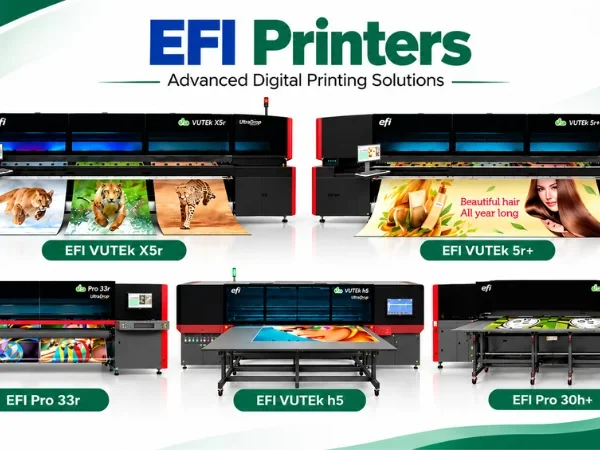
Table of Contents 7 Reasons to Buy EFI Printers for Your Print Business in India EFI printers let one print business serve signage, soft signage,
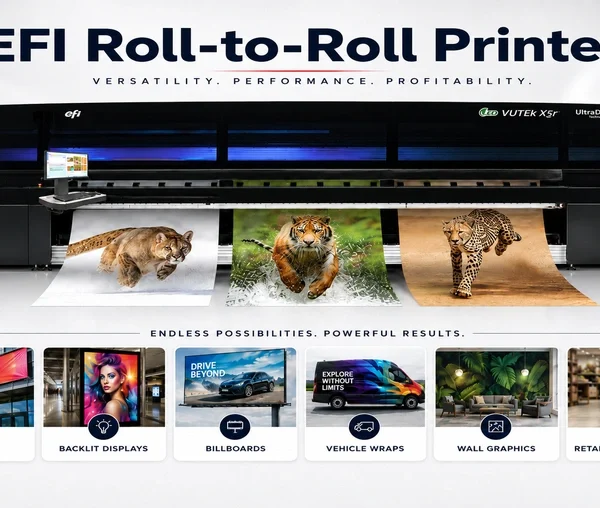
Table of Contents Why You Need EFI Roll-to-Roll Printers for Special Applications EFI VUTEk roll-to-roll printers become all-in-one production platforms with value-added accessories for finishing,
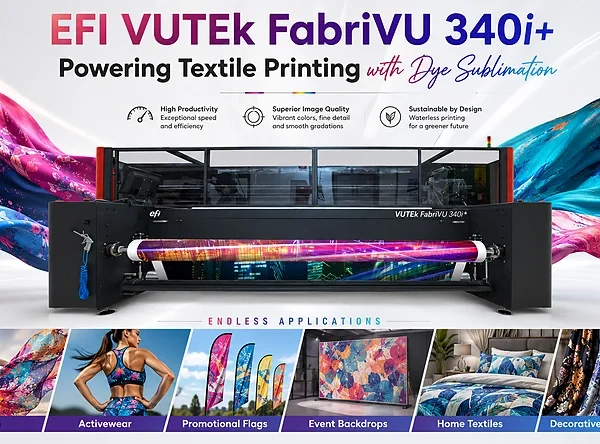
Table of Contents EFI VUTEk FabriVU 340i+ Dye Sublimation: A Great Choice for Textile Printing The EFI VUTEk FabriVU 340i+ prints and fixes fabric graphics
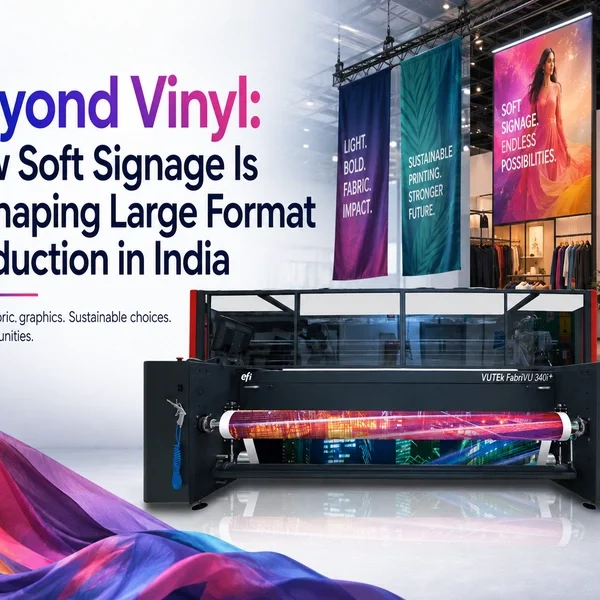
Table of Contents Beyond Vinyl: How Soft Signage Is Reshaping Large Format Production in India Print buyers across retail, events, and hospitality have been moving
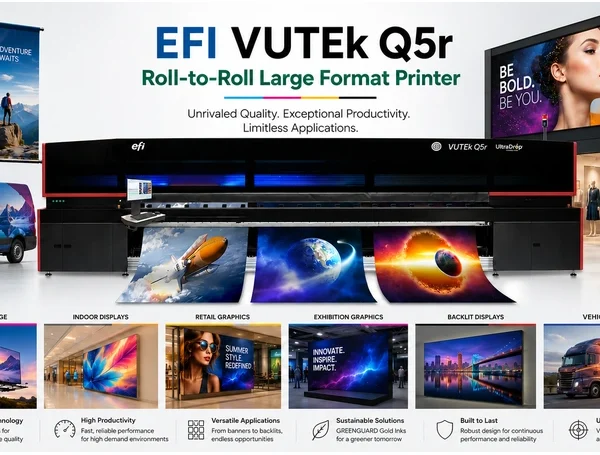
Table of Contents EFI VUTEk Q5r Roll-to-Roll Large Format Printer:Production Capabilities and Ink Options India’s large format print market is being shaped by one consistent
Discover new ways to print and finish labels with Arrow Digital.
Explore aqueous pigment printing, flexible short runs and precision die-cutting.
2026 · THURSDAY–SUNDAY
Greater Noida, Delhi NCR.