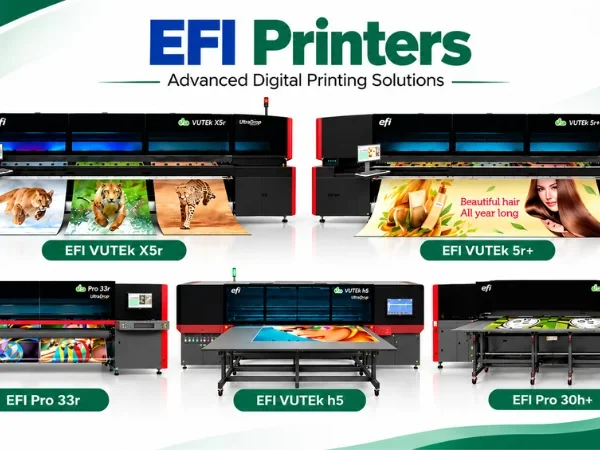
7 Reasons to Buy EFI Printers for Your Print Business in India
Table of Contents 7 Reasons to Buy EFI Printers for Your Print Business in India EFI printers let one print business serve signage, soft signage,

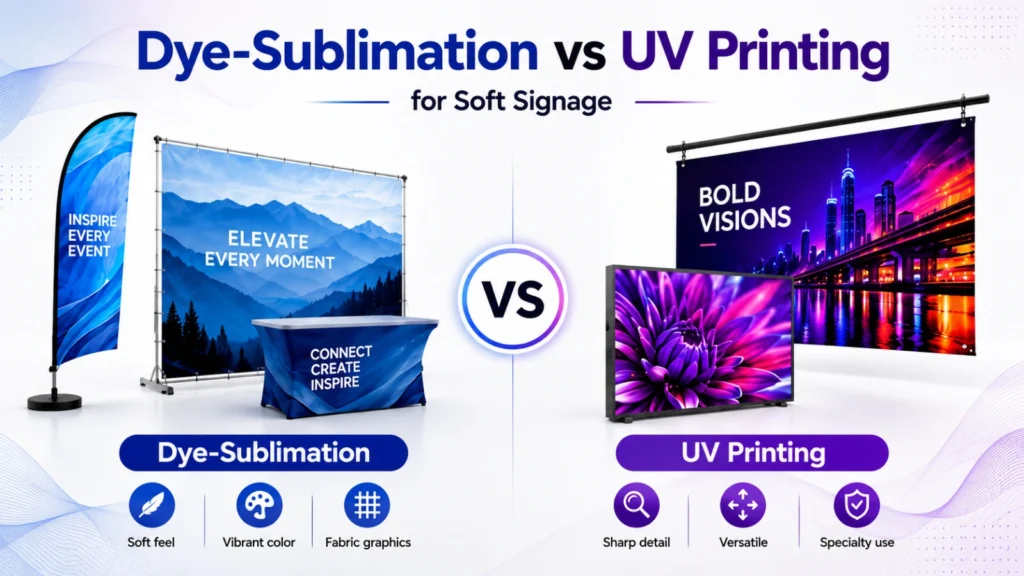
Dye-sublimation bonds colour into polyester fabric; UV printing cures ink on the surface. Both produce high-quality soft signage — but suit different workflows, substrates, and quality tiers.
For print service providers (PSPs) investing in large format printing equipment, the technology choice between dye-sublimation and UV printing directly affects substrate range, fabric feel, colour vibrancy, and operational throughput. This guide explains both technologies, compares their capabilities across eight production-relevant criteria, and helps PSPs identify the right technology for their soft signage production workflow.
Dye-sublimation uses heat and pressure to bond dye into polyester fabric at a molecular level. It is the preferred process for professional soft signage printers producing backlit panels, SEG frames, and tradeshow fabric displays.
Process | Dye is printed onto transfer paper using sublimation inks, then bonded into polyester fabric using a heat press or inline calender at approximately 200°C. |
Ink behaviour | At high temperature, solid dye converts to gas, penetrates polyester fibres, and re-solidifies inside the fabric — the colour becomes part of the material, not a layer on top. |
Output quality | Produces continuous-tone gradients, vivid colours, and a soft drape with no tactile ink layer. Resolution up to 2,400 dpi on compatible equipment. |
Substrate limit | Requires 100% polyester fabric or polyester-coated textiles. Cotton, natural fibres, and untreated synthetics are not compatible. |
Post-processing | Traditionally requires a separate heat press or calender for ink fixation. Advanced printers such as the EFI VUTEk FabriVU 340i+ include an integrated inline fixation unit, eliminating this step. |
Best for | SEG displays, backlit fabric panels, flags, and premium retail tension fabric. See also: how soft signage dominates high-traffic spaces. |
UV printing cures ink instantly on the substrate surface using ultraviolet light. Roll-to-roll UV large format printers enable fast production across a wide range of materials, including some textiles.
Process | UV-curable ink is deposited directly onto the substrate, then immediately exposed to UV lamps. Photoinitiators in the ink polymerise on contact, forming a durable surface layer. |
Ink behaviour | Ink sits on the surface rather than penetrating the material. Flexible UV ink formulations reduce cracking on stretch substrates. |
Output quality | Produces sharp text, fine details, and consistent spot colours on rigid and semi-rigid media. Surface-level ink can affect fabric drape and tactile feel. |
Substrate range | Significantly broader than dye-sub: rigid boards, acrylic, glass, PVC, foam board, vinyl, canvas, and select coated textiles. |
Post-processing | None required. Instant UV cure means output is print-ready directly off the machine with no separate fixation step. |
Best for | Indoor/outdoor rigid signage, fast-turn fabric banners, POP displays. For a technical comparison of UV ink technologies, see why UV printing outperforms latex printing. |

The EFI VUTEk FabriVU 340i+ is a 3.4-metre direct-to-fabric dye-sublimation printer with an integrated inline fixation unit — eliminating the need for a separate calender.
Print Width | 3.4 metres (134 inches) — suitable for seamless backdrops and large-format tension fabric displays. |
Maximum Resolution | 2,400 dpi — delivering photographic-quality output for retail environments and close-view displays. |
Production Speed | Up to 5,172 ft²/hour (480 m²/hour) — high-volume output for demanding soft signage production schedules. |
Inline Fixation | Yes — heat fixation is integrated into the print pass, removing the need for a separate heat press or calender machine. |
Transfer Options | Supports both direct fabric sublimation and paper-based transfer sublimation processes. |
Ideal Applications | SEG displays, frontlit and backlit fabric panels, flag printing, retail fixture wraps, hospitality and venue décor. |
Flag Printing Kit | Integrated kit manages the high ink volumes required for flag production where ink penetration is needed on both fabric sides. |
Distributed by | Arrow Digital India — authorised EFI VUTEk distributor for the Indian market. |
The FabriVU 340i+ is designed for PSPs producing high volumes of premium soft signage. Its inline fixation capability eliminates a separate post-processing machine from the workflow, reducing floor space requirements, finishing labour, and turnaround time simultaneously. Explore seven high-profit applications for the FabriVU 340i+ or read a deeper dive into the FabriVU dye-sublimation technology and textile printing applications.
The table below compares both technologies across eight production-relevant criteria to help PSPs identify the right fit for their soft signage workflow.
Feature | Dye-Sublimation | UV Printing |
Image Quality | High-res; colour embedded in fabric fibres | Sharp output; ink sits on fabric surface |
Colour Gamut | Excellent — especially on polyester | Moderate to wide, depending on ink set |
Fabric Feel | Soft, natural drape — no surface ink layer | Slightly stiff due to cured ink layer |
Wash & Fade Resistance | Excellent — dye bonded at molecular level | Good — surface layer prone to wear over time |
Compatible Substrates | Polyester fabrics (100% or polyester-coated) | Broader: textiles, rigid boards, acrylic, PVC |
Production Speed | Slower — unless inline fixation system is used | Fast — instant UV cure, no post-processing |
Best Application | SEG frames, backlit fabric, flags, tradeshow tension | Rigid signage, POP displays, fast-turn banners |
Heat Press Required? | Yes — unless printer has inline fixation unit | No |
Dye-sublimation delivers superior fabric feel and colour vibrancy for premium soft signage, particularly backlit and stretch applications.
Dye-sublimation requires polyester-compatible substrates and, without an inline system, adds a post-processing step to the workflow.
UV printing offers fast throughput, instant cure, and substrate flexibility — making it practical for mixed-production environments.
UV printing’s surface-level ink layer affects fabric drape and may crack on high-stretch textiles — limiting suitability for premium soft signage applications.
Choose dye-sublimation for premium fabric-based soft signage; choose UV printing for mixed-substrate or rigid-signage workflows requiring fast turnaround.
Still evaluating your options? Read our guide on choosing the right soft signage printer for your production needs for a broader comparison of available equipment options in the Indian market.
Direct answers to the most common questions PSPs and large format print shops ask when evaluating soft signage technology.
Dye-sublimation bonds colour into polyester fabric at a molecular level using heat, producing soft feel and vivid backlit output. UV printing cures ink on the substrate surface using ultraviolet light, enabling faster production across a broader range of materials but producing a stiffer fabric feel.
Dye-sublimation produces superior colour for backlit fabric displays. The dye penetrates polyester fibres, transmitting light evenly and without surface texture — critical for vivid day/night backlit panel performance.
Yes, UV printing can print on select polyester fabrics, but the cured ink layer reduces fabric softness and can crack on stretch fabrics used in SEG frame applications. For premium soft signage, dye-sublimation is the preferred technology.
Traditional dye-sublimation printers require a separate calender or heat press for ink fixation. Advanced systems such as the EFI VUTEk FabriVU 340i+ include an integrated inline fixation unit, completing heat bonding in a single print pass.
The EFI VUTEk FabriVU 340i+ is a 3.4-metre direct-to-fabric dye-sublimation printer with an integrated inline fixation unit. It prints and heat-fixes in a single pass at up to 5,172 ft²/hour, and is distributed in India by Arrow Digital India.
Dye-sublimation is compatible with 100% polyester fabrics and fabrics with a minimum polyester content of approximately 65%. Cotton, natural fibres, and untreated synthetic fabrics do not accept sublimation dye.
Dye-sublimation is preferred for flag production because the dye penetrates both sides of lightweight polyester fabric — critical for flags viewed from both directions. The EFI VUTEk FabriVU 340i+ includes a dedicated flag printing kit for full-penetration flag output.
Yes. Arrow Digital India is an authorised distributor of EFI VUTEk large format printing equipment in India, including the FabriVU 340i+ dye-sublimation printer range.
Macromedia, a large format print provider, on adding the EFI VUTEk FabriVU 340i+ to their production workflow.
“Its wider application range and production-level speeds caught our attention immediately. From homes and hospitality furnishing to flags, retail fixture wraps, and beyond, this printer caters to a diverse array of applications with unparalleled precision and vibrancy. The inline fixation unit negates the need for heat transfer paper and a separate heat press — saving time, money and floor space.”
— Macromedia (Arrow Digital India customer)
Contact Arrow Digital India for a personalised demo of the EFI VUTEk FabriVU 340i+ or to request sample prints from both technologies.
Table of Contents 7 Reasons to Buy EFI Printers for Your Print Business in India EFI printers let one print business serve signage, soft signage,
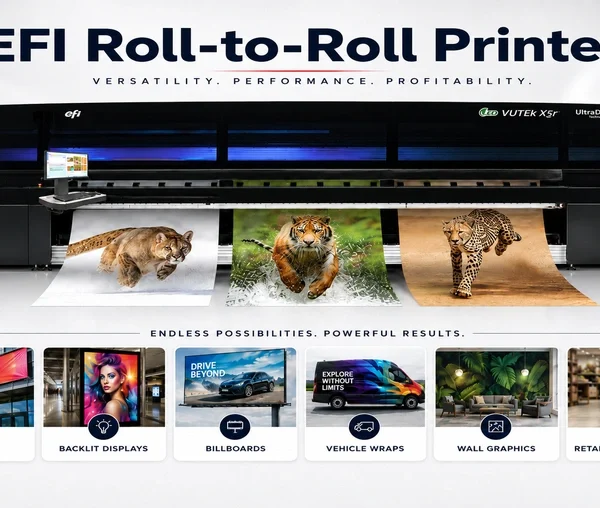
Table of Contents Why You Need EFI Roll-to-Roll Printers for Special Applications EFI VUTEk roll-to-roll printers become all-in-one production platforms with value-added accessories for finishing,
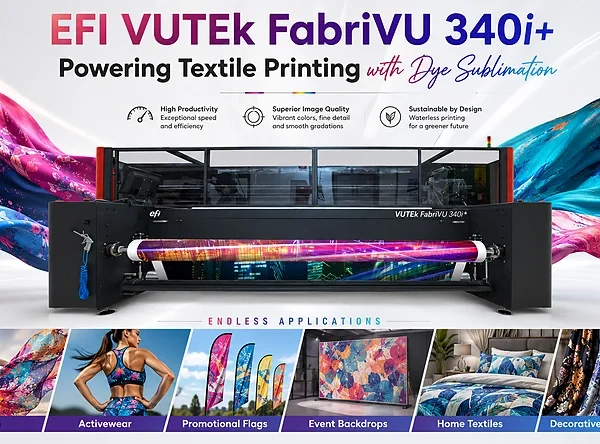
Table of Contents EFI VUTEk FabriVU 340i+ Dye Sublimation: A Great Choice for Textile Printing The EFI VUTEk FabriVU 340i+ prints and fixes fabric graphics
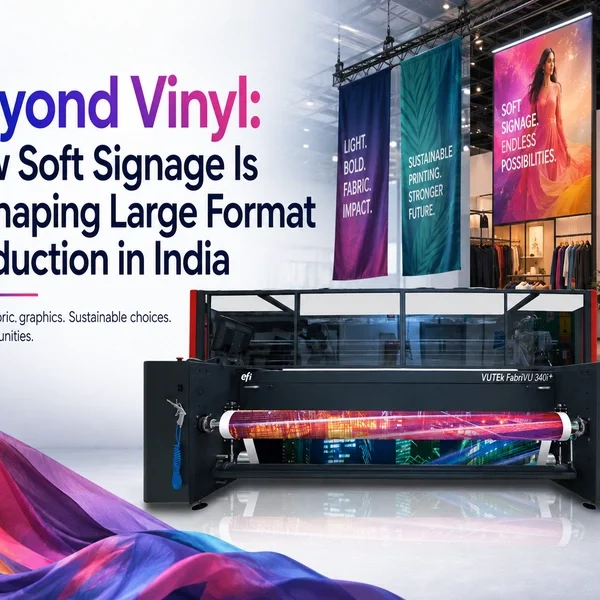
Table of Contents Beyond Vinyl: How Soft Signage Is Reshaping Large Format Production in India Print buyers across retail, events, and hospitality have been moving
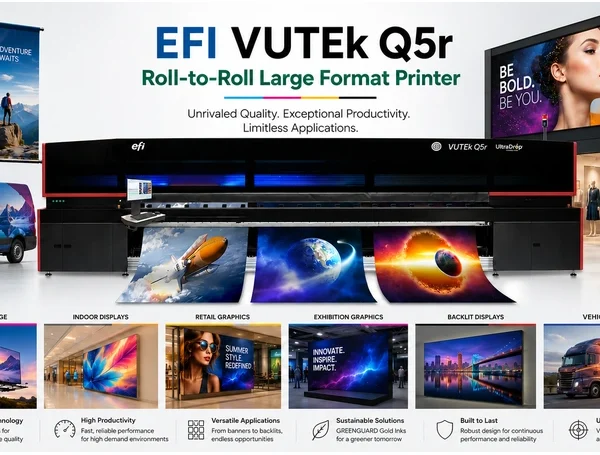
Table of Contents EFI VUTEk Q5r Roll-to-Roll Large Format Printer:Production Capabilities and Ink Options India’s large format print market is being shaped by one consistent
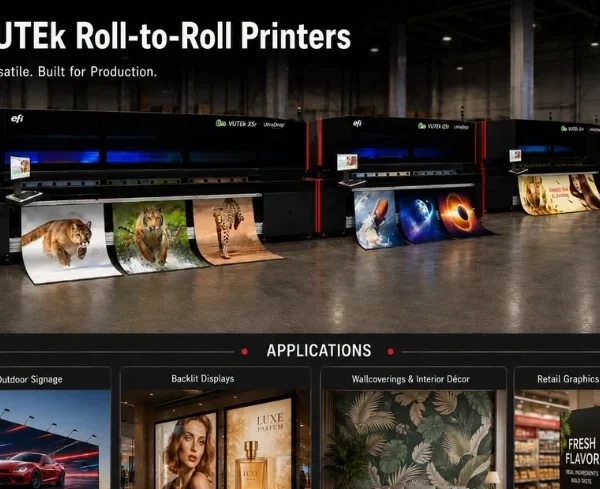
Table of Contents EFI VUTEk Roll-to-Roll Printers: The Complete Lineup Guide for Indian Large Format Print Producers India’s large format print producers evaluating UV roll-to-roll